
Built to last
For us, sustainability begins long before technology: with where a building sits, how it meets the sun, what it is made of, and whether it will still be loved in fifty years.
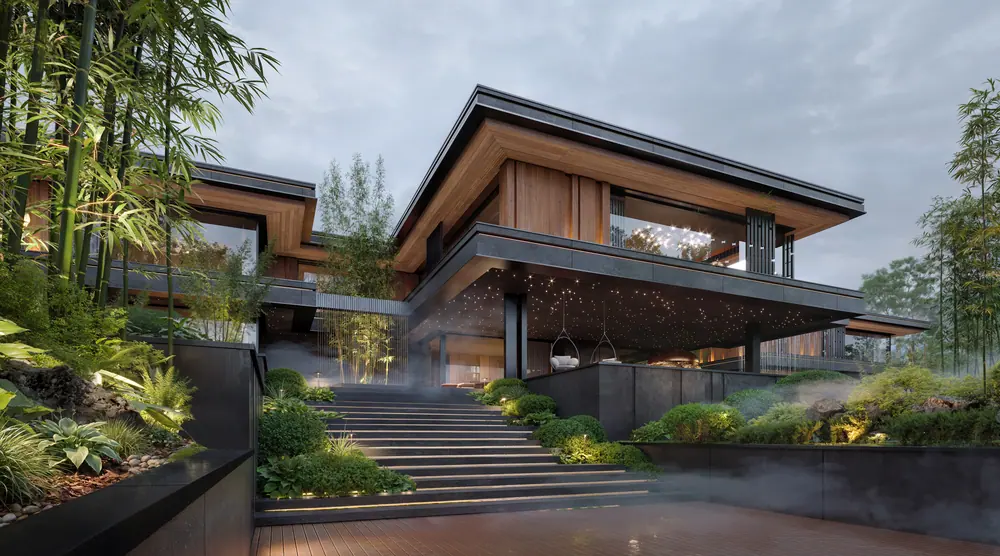
The most sustainable building is one designed for its climate, made to age well and never in need of replacing.
We design for decades, not seasons. Proportion, light and honest materials age well; trends do not. A building that is comfortable without effort and becomes more valuable with time is the most responsible thing an architect can deliver.
Most of a building’s impact is decided in the first sketches: where it sits, how it is shaded, what it is made of. That is why sustainability is part of the design from the first conversation, not a layer added at the end.
[ Six commitments ]
Designed for the long term
Six commitments that shape every project, from a family villa to a residential quarter.
-
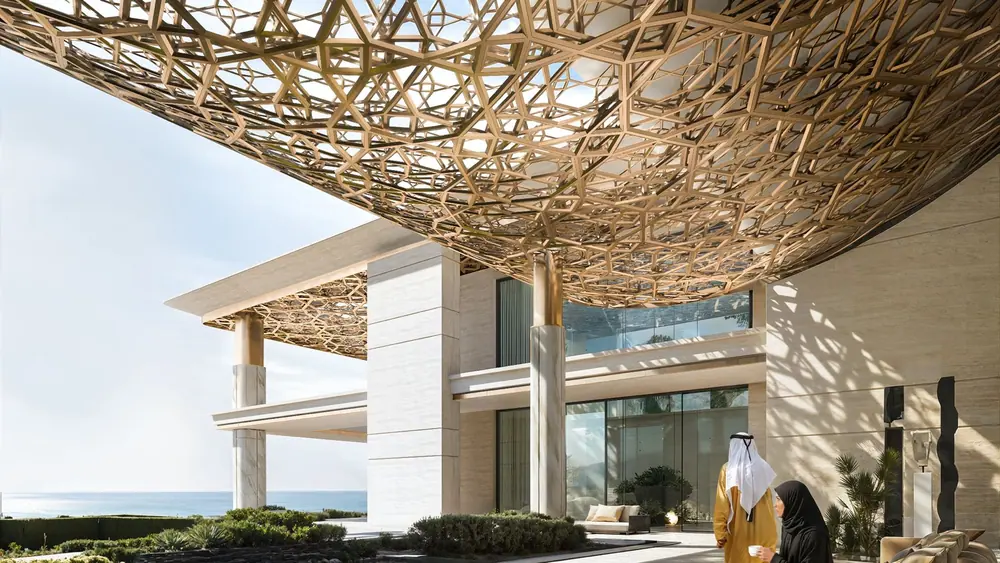
Climate before form
Every concept begins with an analysis of the site and its climate: sun, views, topography, and the rights and constraints of the land. Orientation, roof depth and the position of every opening respond to it before the first image is drawn.
A bronze lattice filters the desert sun over the terraces of Maison Nur.
Maison Nur -
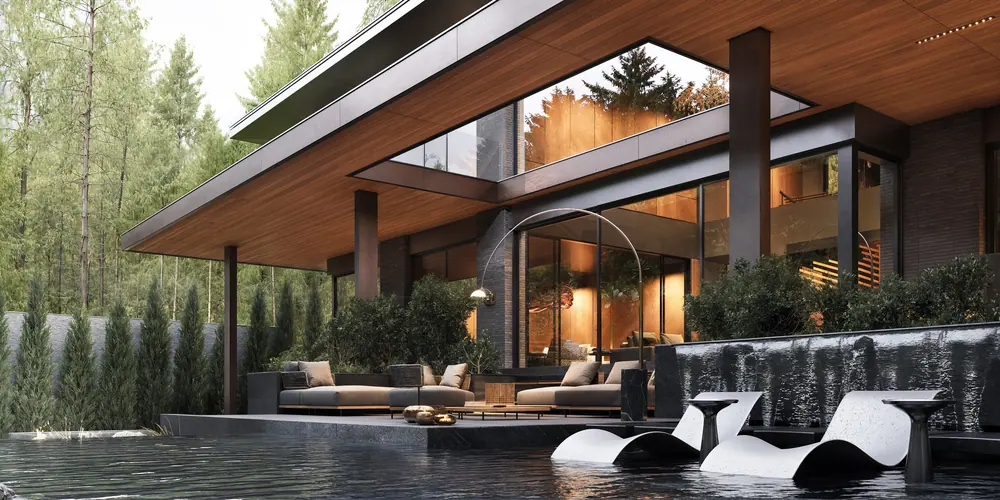
Shade, depth and daylight
Deep overhangs, canopies, pergolas and shaded courts keep the sun off the glass while drawing daylight deep into the plan, the oldest and most reliable way to keep a building comfortable through every season.
Deep timber eaves shelter the terraces of Kanata.
Kanata -
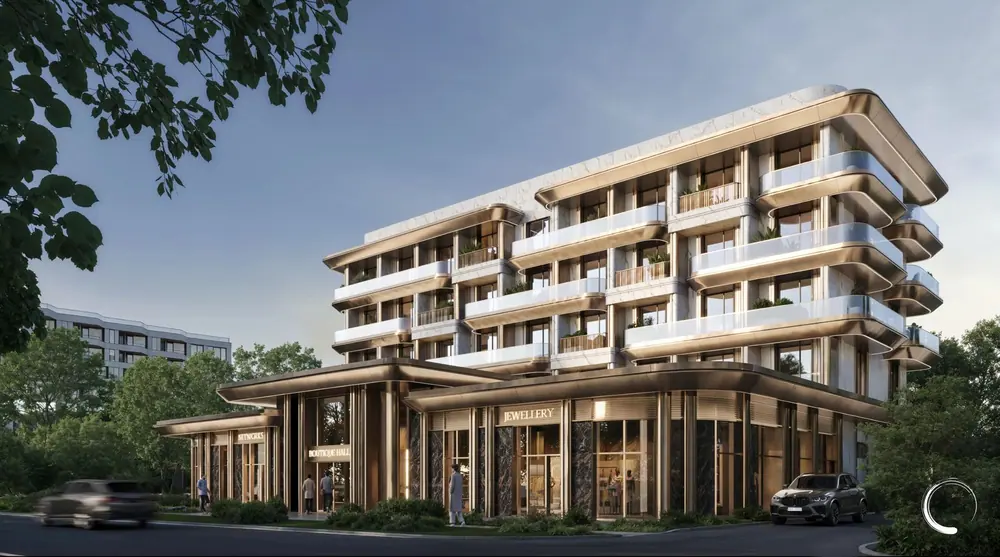
Reuse before rebuild
When a good structure already exists, we transform it rather than replace it: a new identity, new uses and new value, without starting from zero.
Aurus reworks an existing building in Bishkek’s historic centre; Le Serin du Cap turns a coastal building in Mauritius into five residences.
Aurus -
Landscape that belongs
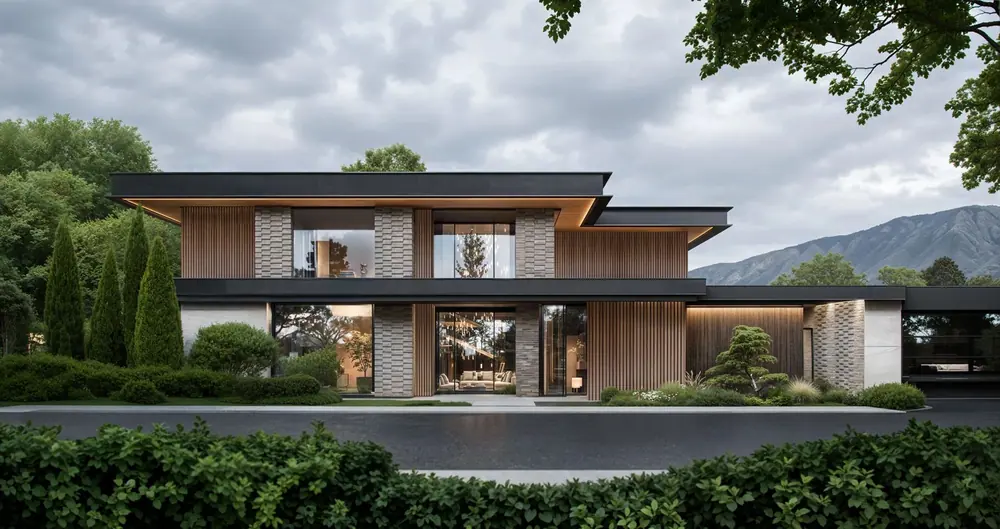
Planting, stone and water are chosen for the climate and the site: local flora where it belongs. Irrigation, drainage and night lighting are designed together with the building, so the landscape thrives instead of being forced.
Apple trees, the emblem of Almaty, are planted throughout the garden of Apple House.
Apple House -
Materials that age well
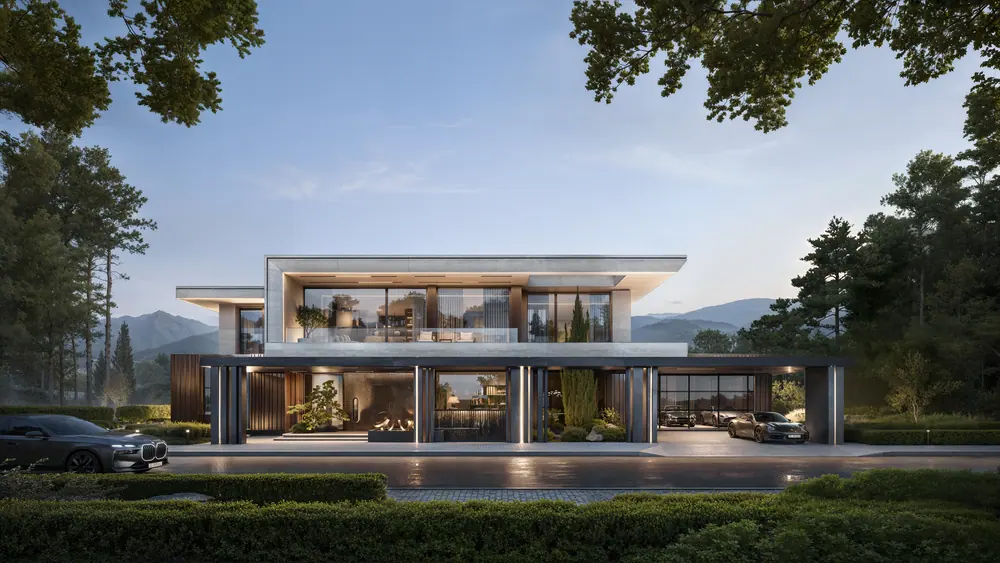
Natural stone, timber, glass and metal, specified for durability and detailed to weather gracefully. A building that looks better in twenty years is a building nobody needs to rebuild.
Solid stone, glass and deep roofs at Linea Residence, Tashkent.
Linea Residence -
Local knowledge
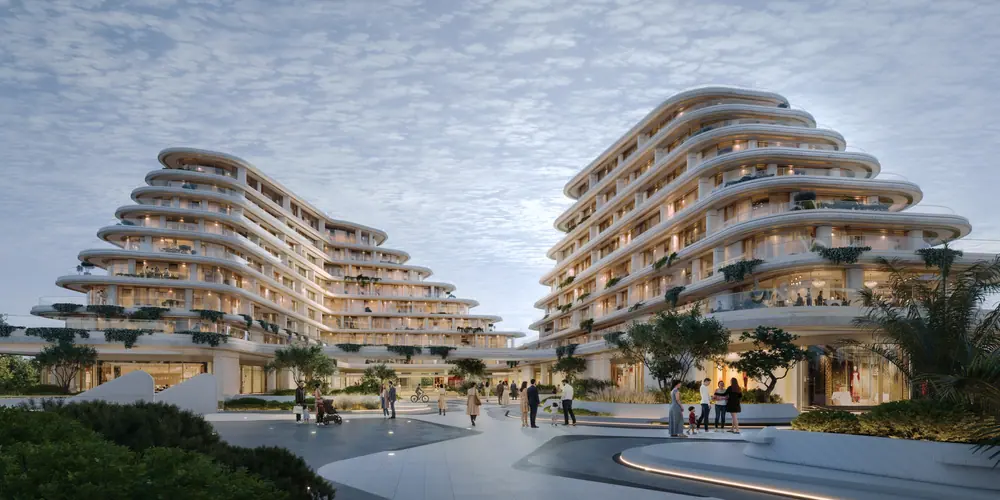
Abroad we work hand in hand with a locally based architect and local trades, building with regional practice, materials and skills rather than importing solutions that do not belong.
In Bishkek, Oasis takes its form from the Tien Shan on the horizon.
Oasis
Designed in, not added on
From Design Development onward, the engineers’ building-services strategy, lighting and landscape are coordinated with the architecture, so systems are designed in rather than added later. Where a project targets a green-building rating, we work alongside the client’s sustainability consultant from the start.
Tell us about the sustainability goals of your project in the first conversation. They shape the design from day one.
Start a projectLet’s talk
Send us what you have: a plot, a floor plan or a rough idea. We’ll come back with a first read on what the site can carry, usually the same day.